Quick Answer
If you’re raising kids in Sydney, a monitored security alarm paired with smart entry points and a bit of everyday awareness is the simplest way to keep your home genuinely safe. It’s not about turning your house into a fortress — it’s about closing the gaps that families with busy routines tend to leave open, like unlocked back doors, garage remotes left in cars, and kids who answer the front door without a second thought.
There is this specific kind of tiredness that comes from being a parent. Besides all the school-related activities on the go, you have to manage the time and energy for the kids’ after-school activities and also the regular chore of keeping the family meals running and feeding every now and then. And it’s no wonder that home security is not the first thing to come across when you are so busy.
It is quite common to see parents who express their worries regarding the same things over and over again when we discuss with them. Someone has heard about a break-in that had been very nearby (just two streets away). Someone else is constantly forgetting to lock the back door, their teen, that is.
And there is another case in which someone has just had their baby and now, everything you hear at two in the morning, from your baby crying to someone moving around at home it all sounds like possible threats to her! None of these things make sense in the context, but they are real and just the result of the situation when you have more people around, running on the various routines, and so much to look after simultaneously.
However, there is another side to this and that is a good one: protecting your home doesn’t actually have to be complicated or expensive. You only have to figure out how to make it fit with your household style and way of life.
Kids change your risk profile more than you’d think
A house with children is very different security-wise from a house with only adults. You will find open doors because some children ran back home after remembering that the hat was forgotten.
Ground floor windows become the weakest point, they remain unlocked because that is the one adjacent to the trampoline. Garage remotes end up in school bags.
All of these are just things that happen. Nobody is responsible for them; they are the side effects of the hectic lifestyle of a family.
Another thing is that kids may be alone at home for part of the time even if it is nothing much but twenty minutes from the school bus to the parent returning home from work. This is the time when house should appear and be actually secure by itself without a responsible adult who can monitor it at that moment.
Hence a good security alarm system is what you need.
It doesn’t mean that dramatic siren and light display but the type that keeps doing its job in the silence alerting the moment a door is open when it shouldn’t, or a window is broken either that you are at the office downtown or you are the one picking a few groceries from Woolworths.
What actually matters for a family home
We’d rather talk you out of overspending than into it, so here’s what genuinely makes a difference for households with kids:
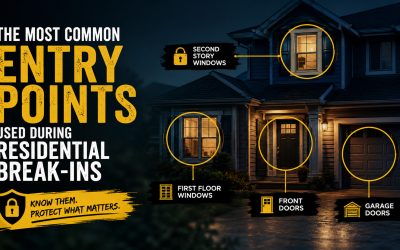
Entry point coverage first. Doors and accessible windows are where almost every break-in starts. Before you think about cameras or anything flashier, make sure every realistic entry point — front door, back door, laundry door, ground floor windows — is covered by sensors on your alarm system.
A monitored alarm, not just a loud one. An alarm that only makes noise relies on a neighbour noticing and caring enough to check. A monitored security alarm gets a response — someone’s actually alerted, and depending on your plan, authorities can be notified too. For a family, that difference matters, especially if nobody’s home to hear the noise in the first place.
Panic buttons in sensible spots. A lot of parents don’t think about this until they’ve got a baby monitor going off at 3am and a strange noise downstairs at the same time. A panic button by the bed is a small thing that makes a real difference to how safe you feel at night.
Smart locks or keypad entry for the kids. If your children are old enough to let themselves in after school, a keypad or smart lock means no more spare keys under pot plants (please, never do this) and no more lost house keys turning into a full afternoon drama.
Cameras at the right spots, not everywhere. You don’t need eight cameras watching your backyard. A camera covering the front door and one covering the main access point at the back is usually plenty for a family home, and it means you can actually check who’s knocking without opening the door — handy on a Saturday morning when you’re still in your pyjamas.
The conversation nobody has: talking to your kids about it
Security systems only work as well as the people using them, and in a family home, that includes the kids. It’s worth having a simple, non-scary conversation about:
- Not opening the door to people they don’t know, even if the alarm’s off
- What to do if the alarm goes off while they’re home (and who to call)
- Not posting on social media that “mum and dad are away for the weekend”
- Keeping garage remotes and spare keys where they belong, not in random school bags
None of this needs to be a lecture. It can genuinely just be a five-minute chat, and it does more for your household’s actual safety than most hardware upgrades.
Sydney-specific things worth knowing
Each suburb of Sydney seems to have its own distinct charm. For houses in the northern suburbs and wooded areas rich in greenery (and consequently with less light from the streets), the perfect solution is to add motion sensor lights around, along with the alarm system. Night visibility is really reduced here due to darkness, so you’ll just love that you’re safe and also your house looks attractive with the lighting.
Flats and small terraces houses in bustling, crowded areas which include inner west and parts of the edge of CBD, generally get more benefit from the intercom-linked security than from comprehensive perimeter coverage, since most often access is via one or two common points.
If you’re in a newer housing estate of outer suburbs, you may want to determine if the alarm system had been configured with builder’s basic package. These are usually limited to bare essentials, families regularly enhance the alarm coverage after setting their feet on the spot and identifying the actual issues.
Getting it right without overthinking it
You don’t need to solve this in one weekend, and you definitely don’t need every gadget on the market. Start with a proper security alarm covering your entry points, add monitoring so it actually does something when triggered, and layer in cameras or smart locks where your household specifically needs them.
The families who feel most at ease aren’t the ones with the most tech — they’re the ones whose system actually fits how they live. A alarm that gets armed every night because it’s simple to use beats a complicated system that gets ignored because everyone’s too tired to bother with it.
If you’re not sure where your home’s weak points are, it’s worth getting a professional assessment rather than guessing. A quick walk-through from someone who does this daily will usually flag two or three things you’d never have thought of yourself — and they’re often simple, inexpensive fixes once you know what to look for.
FAQ
Do I need a monitored alarm, or is a self-monitored one enough for a family home? A self-monitored alarm (one that just alerts your phone) can work if someone’s always available to respond quickly. For most families juggling work and school runs, a professionally monitored security alarm is more reliable, since it doesn’t depend on you seeing your phone at the right moment.
At what age can kids be trusted with the alarm code? There’s no fixed age, but most families introduce it once a child is old enough to be home alone for short periods, usually around 9-12. Keep the conversation simple and specific rather than assuming they’ll just figure it out.
What’s the most commonly missed entry point in family homes? Laundry doors and side gates leading to backyards. They’re used constantly, which means they’re the ones most likely to be left unlocked in the daily rush.